Tragedy in Santo Domingo: Nearly 100 Dead After Jet Set Nightclub Roof Collapse Kills Famous Singer Rubby Pérez, Former Baseball Stars, and Many More in Dominican Republic Disaster
Tragedy in Santo Domingo: Nearly 100 Dead After Jet Set Nightclub Roof Collapse Kills Famous Singer Rubby Pérez, Former Baseball Stars, and Many More in Dominican Republic Disaster

In one of the worst disasters to strike the Caribbean nation in recent years, nearly 100 people lost their lives after the roof of the famous Jet Set nightclub in Santo Domingo, the capital of the Dominican Republic, suddenly collapsed in the early hours of Tuesday, April 8, 2025. The horrifying incident happened shortly after midnight while hundreds of people were dancing and enjoying a live performance by legendary Dominican merengue singer Rubby Pérez, who was tragically killed in the collapse, according to his manager.
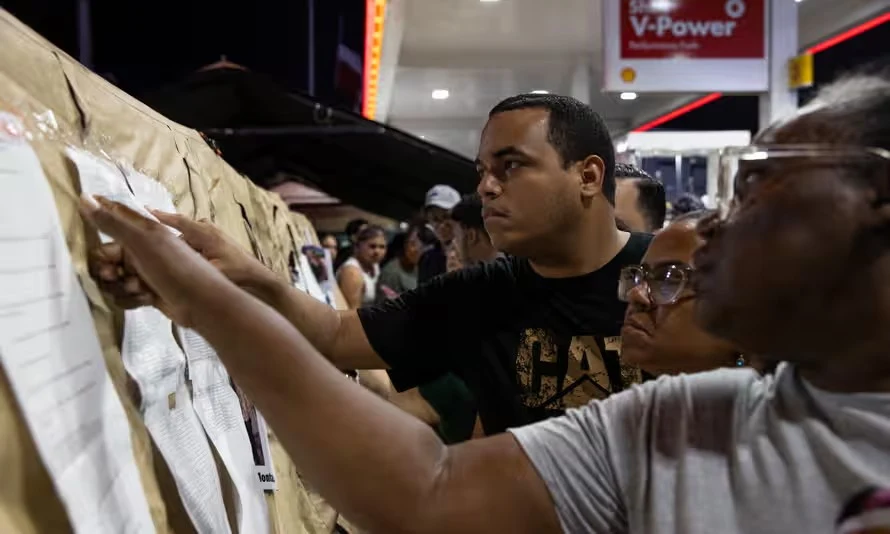 |
| People check lists of the dead and injured outside the Jet Set nightclub. |
Pérez, known as a cultural icon and beloved performer in Latin America and beyond, was on stage performing when witnesses say a sudden blackout occurred, followed by a massive rumble and the roof caving in on the crowd below. Shockingly, the disaster also claimed the lives of other well-known individuals, including former Major League Baseball players Octavio Dotel and Tony Blanco. Dotel, age 51, was reportedly rescued alive but died later from his severe injuries. The governor of the Monte Cristi municipality, Nelsy Cruz, was also among the confirmed victims. The preliminary death toll reached 98 by early Wednesday, according to Juan Manuel Méndez, the director of the Emergency Operations Center (COE), who also stated that no new survivors had been found since 3:00 p.m. on Tuesday. The scale of the tragedy shocked the entire country, with President Luis Abinader declaring three days of national mourning and sharing his “deep regret” via social media, stating that all emergency agencies were working “tirelessly” in the rescue and recovery efforts. Rescue operations included 370 personnel from civil defense, firefighters, police, and medics who worked around the clock, combing through mounds of debris made up of bricks, steel beams, tin sheets, and other rubble.

Heavy machinery such as cranes was brought in to lift massive slabs of collapsed roof as rescuers used shovels and their hands to search for survivors and remove the injured. Helicopter footage showed a wide gaping hole where the club’s roof had once been, with the surrounding area turned into a zone of sorrow and confusion as families gathered, desperately searching for loved ones. Outside the club and nearby hospitals, people scanned hand-written lists of the dead and injured posted on bulletin boards, hoping for good news. One man, Rodolfo Espinal, stood anxiously at the site, saying he had a niece, cousin, and other friends trapped beneath the rubble. “We are desperate,” said Regina del Rosa, whose sister had attended the concert. Another woman, Iris Peña, described the moment of panic when dirt began falling into their drinks, followed by a stone cracking the table where she sat with her son. She said they barely escaped the collapse that she compared to a tsunami or earthquake. Meanwhile, Rubby Pérez’s daughter, Zulinka Pérez, who had been performing as a backup singer at the concert, survived and spoke to the media about the final moments with her father. Fighting back tears, she said her father had kept singing after the collapse so rescuers could hear him. “He’s always told me: ‘If something ever happens to me, cover me so no one takes pictures,’” she recalled emotionally. Sadly, that would be the last time she heard his voice live. The club, Jet Set, had a capacity of about 1,700 people and was believed to be hosting between 500 and 1,000 attendees at the time of the collapse, according to local news outlets. Jet Set was a famous venue known for its long history of merengue concerts and nightlife entertainment, operating for over 50 years and hosting events every Monday. Just hours before the tragedy, the club had posted an invitation encouraging fans to come dance to Pérez’s “greatest hits” in what they called “the country’s best nightclub.” The venue’s management later issued a statement expressing deep sorrow and said they were “fully and transparently” cooperating with authorities. As questions swirled about what caused the collapse, officials said an investigation was underway, but initial reports did not confirm the exact reason. Some suspected structural weakness, poor maintenance, or possibly weather conditions might have contributed, but no official explanation had been given yet. The mayor of Santo Domingo, Carolina Mejía de Garrigó, shared her sympathies in a heartfelt post, saying, “Our city wakes up to a terrible tragedy.” Tributes poured in from the music industry and fans around the world. Wilfrido Vargas, a fellow Dominican music legend, said, “The friend and idol of our genre has left us.” Puerto Rican singer Olga Tañón added, “Maestro, what a great pain he leaves us.” Pérez, who had been a symbol of Dominican pride, was mourned not just for his music, but also for his humility and dedication to fans. The nightclub disaster has deeply shaken the Dominican Republic, a nation where music and nightlife are core parts of culture and tourism. Tourism makes up around 15% of the Dominican Republic’s gross domestic product (GDP), drawing millions of visitors each year for its lively dance clubs, historic colonial architecture, and beautiful beaches. This tragedy comes only two years after another catastrophic event in 2023, when an explosion linked to a plastics company in San Cristóbal killed around 40 people and injured many more. It also recalls the 2005 prison fire in the eastern part of the country that killed over 130 inmates after a fight between prisoners. These repeated tragedies have raised concerns about safety regulations, emergency preparedness, and the ability to prevent similar catastrophes. As the Dominican people mourn, many are calling for justice and accountability. Some families have demanded answers from club owners and city officials, questioning how such a tragedy could occur in a licensed, heavily attended, and well-known venue. Meanwhile, hospitals across Santo Domingo have been overwhelmed with patients, and local authorities have asked for urgent blood donations from the public. Volunteers, non-profit groups, and neighbors have gathered at the scene and hospitals to donate blood, offer comfort, and distribute food and water. The National Emergency Assistance Line has also been opened to allow families to report missing people and receive updates. New vocabulary introduced through this tragedy includes words like “rubble” (broken remains from a building), “rescue personnel” (people trained to save others during emergencies), “debris” (scattered pieces from something destroyed), and “mourning” (deep sorrow due to someone’s death). For many, the most painful part of this disaster is that it took place in a location associated with happiness, music, and dance—a place meant for celebration turned into a site of sorrow overnight. Survivors will carry physical and emotional scars for life, and the Dominican Republic will take time to heal from this national trauma. As authorities continue rescue and recovery efforts and begin a thorough investigation, many Dominicans are holding onto hope, unity, and resilience, honoring the lives lost and promising never to forget the night the music stopped at Jet Set nightclub.
Comments