
“Trump’s \$1 Trillion Dream: Inside His Bold Bid to Bring Saudi Billions to the U.S.”

News is knowledge, Knowledge is news /

 “Trump’s \$1 Trillion Dream: Inside His Bold Bid to Bring Saudi Billions to the U.S.”

In a world where global diplomacy is often measured by quiet negotiations and carefully worded agreements, former U.S. President Donald Trump continues to break the mold with his signature flair for bold headlines and astronomical numbers. This week, Trump heads to Saudi Arabia not just with a diplomatic agenda, but with a staggering goal — he’s seeking \$1 trillion in Saudi investments for the U.S. economy. That’s not a typo. The figure is equivalent to the entire Gross Domestic Product of the oil-rich kingdom in 2024. The visit is already making waves internationally, raising questions among economists, policy experts, and political observers. Is Trump’s \$1 trillion target economically viable? Or is this just another example of his high-risk, high-reward brand of deal-making that has long defined his approach to global leadership? In this article, we’ll unpack the economic context, political optics, and real-world implications behind Trump’s latest venture into high-stakes international dealmaking with Saudi Arabia — a country that remains a powerful, albeit controversial, ally of the United States.

Trump’s diplomatic adventure began in earnest back in 2017 when he visited Riyadh during his first term as president. The visit was filled with grandeur, including sword dances, light shows, and massive investment pledges totaling over \$450 billion. Fast-forward to 2025, Trump is once again seeking eye-popping commitments — but this time, he’s raising the stakes. The crown prince of Saudi Arabia, Mohammed bin Salman (often referred to as MBS), already pledged \$600 billion during Trump’s second term, but that wasn’t enough for the former president. He’s now publicly asking the Saudi government to invest an entire trillion dollars in the U.S., hoping to channel the Kingdom’s oil wealth into American infrastructure, manufacturing, technology, and more.

Saudi Arabia’s current economic reality complicates Trump’s pitch. Despite its vast oil reserves and global energy clout, the kingdom is navigating turbulent fiscal waters. Oil prices have remained below the breakeven point for several quarters, leading to an expanding budget deficit projected to surpass \$70 billion in 2025 alone. Furthermore, Saudi Arabia has ambitious domestic spending plans, particularly around megaprojects like Neom — a futuristic city being built in the desert, which could cost trillions by the time it’s completed. With much of the kingdom’s wealth tied up in such ventures and a growing need to borrow rather than lend, economists question the feasibility of Trump’s trillion-dollar ask.

Still, Trump remains undeterred. “We’ve been very good to them,” he said in a recent interview, referring to the U.S.-Saudi relationship. That relationship has been both lucrative and controversial. Trump’s first term was marked by massive arms deals, deepening security cooperation, and strong personal ties between his inner circle — particularly his son-in-law Jared Kushner — and MBS. The transactional nature of that relationship was on full display in 2018 when, despite the global backlash over the murder of journalist Jamal Khashoggi, Trump refused to cut ties with the crown prince. For Trump, Saudi Arabia has always represented both a strategic ally and a deep-pocketed partner willing to play ball.


From an economic standpoint, Saudi Arabia has made substantial investments in the U.S. over the years. According to data provided by the Saudi sovereign wealth fund (Public Investment Fund or PIF), it has invested over \$110 billion in the American economy since 2017, with an additional \$58 billion in procurement spending. These investments span various sectors, from real estate and entertainment to high-tech ventures and defense. However, even the PIF’s total asset value — about \$925 billion — falls short of Trump’s \$1 trillion target, especially since a large portion is already committed to domestic projects. And in a recent investment forum, the head of the PIF, Yasir al-Rumayyan, said they intend to *decrease* their foreign exposure moving forward — a direct contradiction to Trump’s plan.
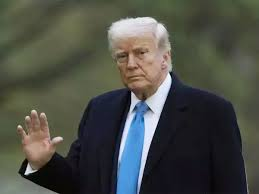
So what’s Trump’s strategy? According to White House Communications Director Steven Cheung, the former president is already responsible for “securing over \$5 trillion in new investments into the U.S. economy.” Critics dispute this number, pointing out that many of the investment announcements during Trump’s first term were either repackaged deals, tentative agreements, or pledges that failed to materialize. For instance, the \$450 billion figure announced during his 2017 visit to Riyadh was largely aspirational, with actual U.S. exports to Saudi Arabia during Trump’s presidency totaling just \$92 billion — less than during Obama’s second term.

Nevertheless, the Trump brand is known for spectacle, and this state visit to Saudi Arabia promises plenty of it. The visit includes a highly publicized investment summit attended by executives from IBM, BlackRock, and Citigroup — many of whom already have deep ties to Saudi business interests. There are plans for high-level meetings, ceremonial receptions, and potentially another slate of headline-grabbing agreements. Saudi officials are expected to roll out a red carpet reception akin to Trump’s 2017 trip, complete with lavish banquets and traditional cultural showcases designed to underscore the Kingdom’s esteem for the former U.S. president.

This visit also comes at a time of growing competition for global capital. With tensions rising in the Middle East, energy markets fluctuating, and alternative investment destinations like China and India becoming more assertive, the United States is vying for a greater share of Gulf investments. Trump’s pitch is simple but bold: Invest in America’s future and secure stronger bilateral ties in return. He’s also likely to push for lower oil prices — a recurring theme in his negotiations with OPEC+ during his presidency.

It’s important to note that Trump’s approach is very different from that of President Joe Biden, whose 2022 visit to the Kingdom was markedly colder. Biden’s interactions with MBS were characterized by tension over human rights concerns and the Khashoggi case. In contrast, Trump has always emphasized mutual economic interests and military cooperation over political values. This transactional philosophy may resonate more with Gulf leaders looking for predictable, business-first relationships.

Still, there are significant risks. Critics argue that putting too much pressure on Saudi Arabia to over-invest in the U.S. could backfire, pushing the Kingdom toward alternative partnerships with China or Russia. Others warn that Trump’s “deal or bust” approach reduces complex diplomatic relationships to little more than business transactions, ignoring regional instability, security risks, and long-term policy consequences.

Meanwhile, Saudi Arabia’s own internal priorities are shifting. Crown Prince Mohammed bin Salman’s Vision 2030 plan aims to diversify the Kingdom’s economy, reduce its dependence on oil, and foster a vibrant domestic private sector. Massive funds are being poured into infrastructure, tourism, technology, and entertainment — from new airports and railways to mega concerts and sports deals. Neom alone is a \$500 billion city of the future, with features like flying taxis, artificial intelligence-driven governance, and a mirror-walled linear city stretching 100 miles. With so many capital-intensive projects at home, Saudi leaders are under pressure to balance international investment ambitions with domestic needs.

In conclusion, Trump’s latest bid for \$1 trillion in Saudi investments may be as much about optics as it is about economics. While it’s unlikely that the Kingdom can deliver on such a colossal promise, the former president is adept at creating momentum through bold declarations, media spectacle, and pressure politics. Whether or not Saudi Arabia delivers the trillion dollars, Trump’s visit is already serving as a powerful reminder of his dealmaker persona — one that continues to shape global headlines, drive political discourse, and ignite debates about America’s role in the world economy.

As this visit unfolds, the world will be watching not just for new deals, but for signals about the future of U.S.-Saudi relations, the trajectory of global investment trends, and the ever-evolving political brand of Donald J. Trump. Whether this trip produces the trillion-dollar jackpot Trump envisions or simply adds another chapter to his long-running showmanship in international diplomacy, one thing is clear: the art of the deal is alive and well.


Comments

Recent

Trump Warns of More US Casualties as Hezbollah Joins the Widening Regional Conflict

News is knowledge, Knowledge is news / Trump Warns of More US Casualties as Hezbollah Joins the Widening Regional Conflict At least three US troops have died since the United States and Israel attacked Iran. This has led to big retaliation from Iran and now the fighting is spreading fast. The whole Middle East feels unsure and worried. President Donald Trump has said more American soldiers may lose their lives before the job is done. Hezbollah, a group backed by Iran, has started attacking Israel too. This is making the problem much bigger. How Did This All Start? The Background in Simple Words For many years, Iran and the United States have not been friends. Iran has a government that the US and Israel call dangerous. They say Iran wants to build nuclear weapons – bombs that can destroy whole cities. Iran says it only wants peaceful nuclear power for electricity. President Trump came back to the White House and tried to talk with Iran. He offered deals to stop the nuclear work. Ira...

Lebanese PM Bans Hezbollah’s Military Activities After Attack on Israel

News is knowledge, Knowledge is news / Lebanese PM Bans Hezbollah ’s Military Activities After Attack on Israel In a major development amid rising tensions in the Middle East, Lebanese Prime Minister Nawaf Salam has announced a ban on all military and security activities by Hezbollah. He called these actions "illegal" and said the group should limit itself to politics only. This comes after Hezbollah launched rocket and drone attacks on Israel from Lebanon. The attacks were in response to the reported killing of Iran's Supreme Leader Ayatollah Ali Khamenei during joint U.S.-Israeli strikes . Israel quickly hit back with air raids on southern Beirut, causing many deaths and injuries. This decision marks a turning point for Lebanon, a country already struggling with economic problems and political divisions. The ban aims to stop non-state groups from starting military actions, which could drag Lebanon into a wider war. Experts say this move shows Lebanon's government t...

Semaglutide May Reverse Damage Caused by Osteoarthritis, Study Suggests

News is knowledge, Knowledge is news / Semaglutide May Reverse Damage Caused by Osteoarthritis, Study Suggests A groundbreaking new study suggests that semaglutide —the active ingredient in popular drugs like Ozempic and Wegovy —could do more than help with weight loss and diabetes . It may actually help reverse some of the damage caused by osteoarthritis (OA), the most common form of arthritis worldwide. This research, published in February 2026 in the journal Cell Metabolism , comes from a team of scientists in China and the United States. They found that semaglutide protects and repairs joint cartilage in ways that go beyond just reducing body weight. This discovery could change how doctors treat OA, especially for people who are overweight or have metabolic issues like diabetes. What Is Osteoarthritis? Osteoarthritis happens when the protective cartilage in joints breaks down over time. Cartilage acts like a cushion between bones, allowing smooth movement. When it wears away, ...

Iran and the United States Resume Nuclear Negotiations as Trump’s War Clock Ticks Down

News is knowledge, Knowledge is news / Iran and the United States Resume Nuclear Negotiations as Trump’s War Clock Ticks Down As Iran and the United States prepare for another critical round of nuclear negotiations in Geneva , the world finds itself once again standing at the edge of a familiar but deeply consequential crossroads, where diplomacy, military power, intelligence assessments, and domestic politics collide, raising urgent questions about whether the renewed talks represent a genuine path toward de-escalation or merely the final diplomatic pause before a new and potentially devastating conflict in the Middle East, especially as President Donald Trump continues to signal impatience while simultaneously assembling one of the largest U.S. military force concentrations in the region in years. The negotiations, scheduled to enter a third round in Geneva , come at a moment of extraordinary tension, with Tehran expected to present a new proposal addressing nuclear enrichment limi...

Iran and Israel Launch Fresh Attacks After Killing of Supreme Leader Khamenei, Escalating to Full-Scale Regional War

News is knowledge, Knowledge is news / Iran and Israel Launch Fresh Attacks After Killing of Supreme Leader Khamenei, Escalating to Full-Scale Regional War As of March 1, 2026, the Middle East has plunged into open warfare following the confirmed death of Iran's Supreme Leader Ayatollah Ali Khamenei in a joint U.S.-Israeli airstrike on February 28. Codenamed Operation Epic Fury by the United States and Operation Roaring Lion by Israel, the initial assault targeted Iranian military infrastructure, nuclear-related sites, missile production facilities, and leadership compounds in Tehran and beyond. Khamenei's killing—along with dozens of senior IRGC commanders, security advisers, and family members—has triggered immediate and ferocious Iranian retaliation, with fresh waves of missile and drone strikes exchanged between Iran, Israel, and U.S. assets across the region. The conflict has already disrupted global oil markets, forced airport closures, and raised fears of a broader w...

Trump Pursues Iranian Decapitation Without a Plan for What Comes Next

News is knowledge, Knowledge is news / Trump Pursues Iranian Decapitation Without a Plan for What Comes Next President Donald Trump has launched a major military campaign against Iran, called " Operation Epic Fury ." The goal includes destroying Iran's nuclear program , missile capabilities, navy, and proxy groups. Most importantly, it aims for regime change by killing top leaders, including Supreme Leader Ayatollah Ali Khamenei , who died in U.S.-Israeli strikes starting February 28, 2026. This "decapitation" strategy—removing the head of the government—happened fast. But experts and critics say the U.S. has no clear plan for what happens after. History shows that toppling bad leaders often leads to chaos, not peace. The U.S. has tried this before in places like Iraq , Afghanistan, and Libya—with poor results. We look at the current situation in Iran, Trump's approach, past U.S. failures in regime change, risks today, expert opinions, and possible futures....

OpenAI Announces $110 Billion Funding Round with Backing from Amazon, Nvidia, SoftBank

News is knowledge, Knowledge is news / OpenAI Announces $110 Billion Funding Round with Backing from Amazon , Nvidia , SoftBank // OpenAI, the company behind ChatGPT , made history on February 27, 2026. It announced a massive $110 billion funding round. This is one of the largest private investments ever in a tech company. Major backers include Amazon with $50 billion, Nvidia with $30 billion, and SoftBank with $30 billion. The deal values OpenAI at $730 billion before the new money (pre-money valuation). After adding the $110 billion, the post-money valuation reaches about $840 billion. This jump shows how fast the AI world is growing. Just months ago, OpenAI was valued at around $500 billion. A year earlier, in March 2025, it raised $40 billion at a much lower value. CEO Sam Altman called it a step to "scale AI for everyone." The money will fund bigger computers, new AI models, talent hires, and global reach. It also strengthens OpenAI's nonprofit side for good causes...

Iran’s Supreme Leader Killed in US-Israeli Strikes//

News is knowledge, Knowledge is news / Iran’s Supreme Leader Killed in US-Israeli Strikes// US President Donald Trump called for regime change following the massive American and Israeli attack, which prompted an unprecedented wave of retaliatory strikes by Iran. The world woke up to shocking news on February 28, 2026. Iran's Supreme Leader, Ayatollah Ali Khamenei , was killed in a joint US-Israeli military strike. President Donald Trump announced it first on Truth Social , calling Khamenei "one of the most evil people in history." Iranian state media confirmed it hours later. The attacks hit Tehran and other key sites, killing many top leaders. Iran fired back with missiles and drones at Israel, US bases, and Gulf countries. This has sparked fears of a big war. Trump named the operation "Epic Fury." He said it aims to end Iran's nuclear program , destroy its missiles and navy, and change the government. In a video, he told Iranians: "When we are finish...

Iran retaliates after U.S.-Israel strikes; Trump calls for regime change//

News is knowledge, Knowledge is news / Iran retaliates after U.S.-Israel strikes; Trump calls for regime change// Tensions in the Middle East reached a boiling point on February 28, 2026. The United States and Israel launched joint military strikes on Iran early this morning. Targets included nuclear sites, missile facilities, and leadership offices in Tehran. President Donald Trump announced the attacks in a video message, calling them " Operation Epic Fury ." He urged Iranians to rise up and "take over your government," signaling a push for regime change. Iran quickly fired back. It launched missiles and drones at Israel and U.S. bases across the region, including in Iraq, Syria, Saudi Arabia, the UAE, Bahrain, Qatar, and Kuwait. Explosions rocked several cities. Oil prices jumped over 15% in hours, hitting near $100 per barrel. World leaders called for calm, but fears of a wider war grew. This live updates page tracks the fast-moving events. It mixes real-time...

Austin Police Officially ID and Release Photo of West 6th Shooting Suspect

News is knowledge, Knowledge is news / Austin Police Officially ID and Release Photo of West 6th Shooting Suspect A tragic mass shooting shook downtown Austin early Sunday morning, March 1, 2026. Three people lost their lives, including the gunman, and 14 others were hurt. The attack happened outside Buford's bar on West Sixth Street , a busy nightlife spot full of bars, music, and young people having fun. Now, Austin police have named the suspect and shared his photo. This brings some answers but raises many more questions about why this happened. What Happened That Night? The Shooting Timeline It was just before 2 a.m. on Sunday, March 1. West Sixth Street was crowded with people leaving bars after a busy weekend night. Buford's Backyard Beer Garden is a popular spot with outdoor patios where friends gather for drinks and music. Suddenly, shots rang out. Witnesses said a large SUV drove slowly around the block a few times. Then it stopped. The driver turned on hazard lig...